Invest in Russia — invest in Russian regions!
All analytics

Medium-Tonnage LNG in Russia: Up in the Air

Research
5 April 2019

The number of countries that use liquefied natural gas (LNG) in one form or another to support their economic growth and ensure energy security is rapidly growing. In some cases, LNG projects become more competitive than traditional pipeline solutions. The analysts of the Moscow School of Management SKOLKOVO state in their report that, compared to large- or small-tonnage projects, medium-tonnage projects have the following competitive advantages: lower capital expenditures, shorter construction periods, relatively low natural gas requirements, possibility of building a series of identical lines on one location, and a fairly wide range of medium-tonnage technologies. Medium-tonnage LNG projects provide flexibility, helping to adapt to changes in market demand without creating excess capacities. With a relatively fast return on investment and a high internal rate of return (IRR), medium-tonnage projects seem to be the most appropriate to the current market realities.

Russia’s huge advantage is its geographical position in relation to the EU and China — the world’s largest consumers of energy resources. At the same time, low competition among contractors for building LNG facilities, the necessity for importing main process equipment, lack of experience with implementing medium-tonnage LNG projects, and high interest rates for attracted investments usually result in substantial capital costs per capacity unit for Russian medium-tonnage projects — both for the liquefaction cycle itself and for building the required infrastructure like seaport facilities, pipelines, roads, and power lines. Nevertheless, owing to a low cost of the natural gas itself, aggregate short-term marginal costs for medium-tonnage LNG projects in Russia remain among the lowest globally. In 2019, as many as three medium-tonnage LNG production facilities are to be commissioned in Russia. Of these, two are located on the Baltic sea and the third one is an expansion of the Yamal LNG large-tonnage project.

In order not to miss the window of opportunity for developing LNG projects, Russia is creating a predictable and transparent environment for doing business in this sector. In December 2018, the Government of the Russian Federation made an important and much-anticipated move: it allowed to sell LNG and regasified LNG to some categories of consumers at a price that is higher than the rates established by the Federal Anti-Monopoly Service. In addition to that, for a successful development of medium-tonnage LNG production in Russia the sector requires state support in the following areas: developing special statutory regulation conditions for medium-tonnage projects, which will help reduce capital costs and construction periods; simplifying the procedure for connecting to gas pipelines; supporting non-discriminatory access to LNG terminals and infrastructure units, including LNG production capacities; abolishing monopoly for LNG exports, which will open new markets and access to foreign capital, etc.

The research done by the authors of the report demonstrates that implementing these measures will bring extra investment of over 300 billion rubles before 2023, while medium-tonnage production capacities can be expected to increase by 5 million tons, of which around 1 million tons can be supplied to the domestic market and 4 million tons can be exported.
Anlytics on the topic

All analytics
Research
18 January 2022
Russian-Finnish Cooperation in the Field of Sustainable Development in the Arctic Region 2021-2022

The report was prepared as a result of the event «Russian-Finnish Cooperation in the Field of Sustainable Development in the Arctic Region» as part of the ThinkArctic Project, organized by the Roscongress Foundation, the Center for Comprehensive European and International Studies, and the Analytical Center for the Government of the Russian Federation.


Expert opinion
3 September 2022
Alexei Chekunkov: “The pivot to the East runs through the Arctic”

Minister for the development of the Russian Far East and Arctic Alexei Chekunkov spoke to the Eastern Economic Forum 2022 magazine about the impact the current political situation is having on the development of the region, the most profitable infrastructure project in Russian history, and a new approach to urban planning.

Articles
2 July 2020
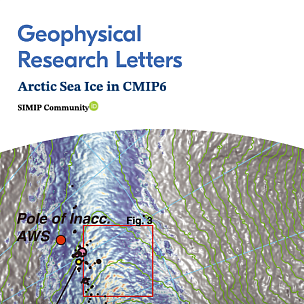
Arctic Sea Ice in CMIP6

This paper examines Arctic sea-ice simulations generated by the Coupled Model Intercomparison Project (CMIP6) which makes it possible to model future evolution of the sea-ice cover in the Arctic.

Research
28 May 2021
Where to go from here: the race for decarbonization

A study by consulting firm Arthur D. Little explores how energy companies can adapt to the mounting decarbonization agenda.