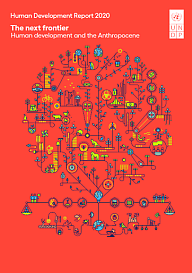
The UNDP Annual Report on Human Capital Development in 2020 presents a new perspective on human development in the Anthropocene and offers an adjusted methodology for calculating the Human Development Index.
Analysts of the Roscongress Foundation have identified the main theses of this study, accompanying each of them with a relevant piece of video broadcasts of panel discussions held as part of the business programs of key events held by the Foundation.
Planetary and social imbalances reinforce each other.
Many forms of inequality in human development already have intensified and continue to do so. Climate change, among other dangerous planetary changes, will only worsen them. Social mobility is declining; social instability is growing. Threatening signs of democratic retreat and growing authoritarianism are worrying. From the COVID-19 pandemic to climate change, collective action is increasingly difficult amid social fragmentation.

COVID-19 pandemic dealt biggest hit to the global Human Development Index in history.
The COVID-19 pandemic may have pushed about 100 million people below the extreme poverty line, the worst hit of our generation. At the same time, we are talking not only about threats to the health of the population. Many restrictive measures related to the fight against the spread of the viral infection have created barriers to peoples participation in decision-making, have led to the restriction of rights and freedoms, and prevented people from following their own ideas about the path of development in search of a fulfilling life.

The standard calculating methodology for the Human Development Index no longer reflects real conditions and requires its modification, taking into account the planetary pressure and the massive digitalization of all socio-economic processes.
The long-standing approach of defining human development on the basis of health, education and income data no longer reflects objective reality. The Human Development Index remains useful for measuring a set of basic capabilities, but it is clear that we have gone beyond one «dominant» indicator. In fact, the Human Development Index has never claimed to fully express the level of human development in its entirety. The challenges we have faced and the opportunities we have always been more complex, much more multidimensional and interconnected than what any one approach to measuring them can capture or even multiple approaches, regardless of how lucky they were. The complex nature of the problems requires its consideration through a whole set of prisms, the key ones of which are the assessment of the environmental consequences of ensuring an increase in the level of human development and taking into account the technologies that determine our way of life.

We also invite you to familiarize yourself with other materials posted in special sections of the Roscongress Information and Analytical System Climate Change, Standards of living, Digitalization and Sustainable Development, dedicated to possible ways to improve the level of human development.