The special 2020 edition of Edelman Trust Barometer, an annual publication by the global communications firm Edelman, studies the impact of the COVID-19 pandemic on brand trust and the role of brands in the current conditions. The study was conducted from March 23 to March 26, 2020 by means of a 12-market online survey (Brazil, Canada, China, France, Germany, India, Italy, Japan, S. Africa, S. Korea, U.K., and U.S.) that covered a total of 12,000 people (1,000 per market).
The Roscongress Foundation presents the salient points of the publication accompanied by fragments of broadcasts of relevant panel discussions from the business programme of key international events held by the Roscongress Foundation.
1. Given the pandemic, brands should focus on solutions, not on selling
The majority of the participants of the Edelman survey (62%) agree that brands are critical to winning the fight against the COVID-19 pandemic. Also, respondents think that brands and companies are responding more quickly and effectively to the pandemic than the government is.
The respondents are convinced that brands must do everything they can to protect the well-being and financial security of their employees and their suppliers, even if it means suffering big financial losses until the pandemic ends.
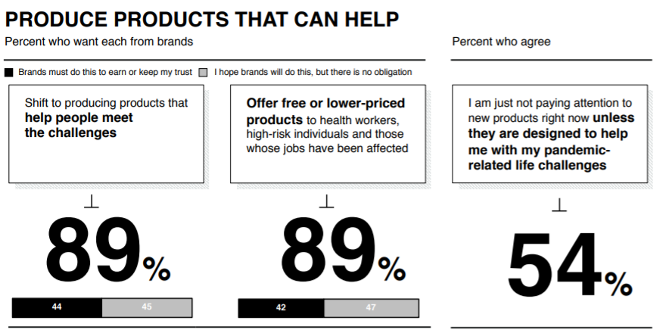
Also, the respondents consider it crucial that brands shift to producing products that help people meet the challenges. According to the participants of the survey, its both necessary and fair that brands offer free or lower-priced products to health workers, high-risk individuals and those whose jobs have been affected. During the pandemic, people are hardly paying any attention to new products unless they are designed to help with pandemic-related life challenges.
2. The public appreciates it when brands communicate with emotion, compassion and facts
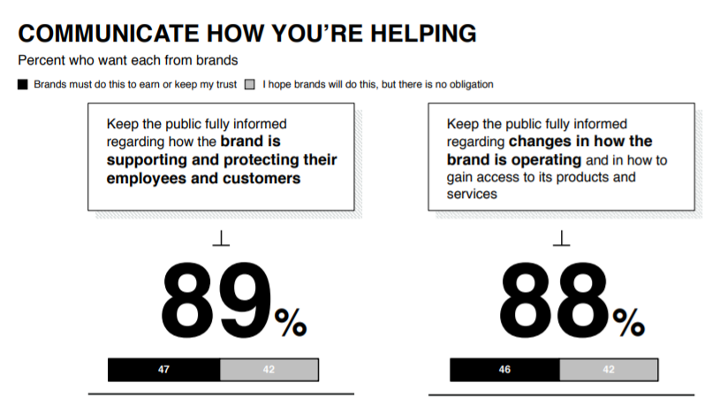
The majority of the participants of the survey believe that in the current conditions it is an essential part of brand policy to keep the public fully informed regarding how the brand is supporting and protecting their employees and customers. Moreover, because of the high uncertainty regarding the present situation, it shows the brand in a good light if it keeps the public fully informed about changes in how the brand is operating and in how to gain access to its products and services.
Statements expressing empathy and support for those most affected by the pandemic are highly valued by the public. The countries attaching the greatest importance to such support are Brazil, RSA, India, China, and Canada.
The respondents name TV, radio and newspapers, e-mail, and the brands website as the preferable methods of communication. Regular mail is considered the least effective channel.
3. Impact for Brands
The participants of the survey mainly agree that in this time of crisis trust becomes the decisive factor. 60% of respondents state that they are turning more and more to the brands that they can trust.
Moreover, a considerable share of respondents (37% on average) have recently started using a new brand because of the innovative or compassionate way the company has responded to the virus outbreak. The countries with the greatest share of respondents who are guided by positive brands actions include China (82%), India (60%), South Korea (52%), and Brazil (46%).
Brand policy in this time of crisis will have a huge impact on the likelihood of people buying that brand in the future. The majority of consumers (71%) state that brands and companies that are placing their profits before people in this time of crisis will lose their trust forever.
Video: https://roscongress.org/sessions/balans-otechestvennykh-i-zarubezhnykh-proizvoditeley-lekarstv-v-interesakh-rossiyskikh-patsientov/search/#01:31:10.208