I have just finished the night shift on the Covid-19 ward. I look at myself in the mirror: I have a C on my nose from the FFP2 (N95) mask I wear all the time, deep marks on my face left by the elastic bands; my eyes look tired, my hair is damp with sweat. I am not a doctor and a woman any longer — now I am just a doctor, a soldier in the war against the virus.
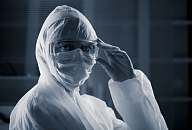
Before starting my shift, I have to don the protective gear — this is when I get the adrenaline rush: you are in the room with your colleagues, you try cracking a joke, but our eyes reflect our worry about protecting ourselves adequately as we carry out correctly all the steps in dressing: gloves, gown, second pair of gloves, glasses, cap, mask, visor, shoes, shoe covers...and tape over tape to keep everything sealed. The person who helps you dress writes your name and your role on your lab coat with a red marker, because when we are so costumed nobody recognizes anybody else. And when she says «Done,» it’s time to enter the ward.
You feel like a soldier about to jump from a plane, hoping your parachute will open: you hope the mask and the visor will protect you, you hope the gloves will not rip, you hope that nothing «dirty» will come in contact with your body.
Entering the ward is like walking into a bubble: all sounds are muffled by the heavy equipment. For the first 10 to 15 minutes you can’t see anything because your breath fogs up the visor until it adapts to the temperature, and then you start seeing something between the droplets of condensation. You walk in, hoping the shoe covers will not come off as usual, and the shift starts.
You take your instructions from your exhausted colleagues from the previous shift. There is a phone that’s used for receiving special instructions on hospitalizations from the regional coordinator of the health system; you hope it will not ring often and that hospitalizations will be few. You and your colleagues sort out tasks and you start visiting patients: the young patient you were about to intubate the other day is getting better, the elderly one is dying, the nun is still fighting, and the nurse from your hospital is not doing well.... You see faces you don’t know and others you know very well, the faces of people who worked in your ward until only a couple of weeks ago.
It’s amazing how quickly everything has changed. Your research and clinic routine feel so far away. You miss the emergency department shifts because compared with this, they appear easy as pie. The hours go by, and your nose hurts more and more, the mask cuts through your skin and you can’t wait to take it off and finally breathe. Breathe. It’s what we all want these days, doctors and patients, nurses and care workers. All of us. We want air.
Finally, the end of your shift comes, 8 hours made even longer and more endless by thirst, hunger, and the need to relieve yourself, things you cannot do when you’re on duty: drinking, eating, or going to the bathroom would mean taking off the protective equipment. Too risky. And too expensive. Protective equipment is precious, and taking it off means having to replace some of it, reducing the quantity available to your colleagues. You have to be thrifty, you have to resist and wear a diaper you hope you won’t have to use because your dignity and your psychological state are compromised enough as it is by the work you are doing, the look on the patients’ faces, the words of their relatives when you call them to update them on the condition of their loved ones. Some ask you to wish their father a happy name day, others to tell their mother they love her and to give her a caress...and you do what they ask, trying to hide from your colleagues the tears in your eyes.
The end of the shift comes, reinforcements arrive, other colleagues take over. You give them instructions, the things to do, the things not to do. You can go home, but first you have to take off your protections, and you must be careful — careful with every move you make. Removing protective equipment is another ritual that must be performed calmly, because everything you are wearing is contaminated and must not come in contact with your skin.
You are tired and you just want to get away, but you must make one last effort, concentrate on each movement you make to remove all the protections. Each movement has to be slow. You can finally take off the mask, and when you peel it off, you feel a searing pain from the bleeding cuts that it made in your nose. The tape was useless — it didn’t stop your nose from bleeding or hurting. But at least you’re free. You leave the undressing area naked, put on uniform scrubs, and go to the changing rooms.
You get dressed, leave the hospital, and take a deep breath. Get in the car. When you get home you have to be watchful again. The entryway is already organized like the hospital undressing area because you cannot risk contaminating the house. You undress, put everything in a bag, and quickly take a hot shower: the virus can survive on your hair, so you have to wash yourself thoroughly.
It’s over. The shift is over, the fight has just begun.