
Globalization is slowing down
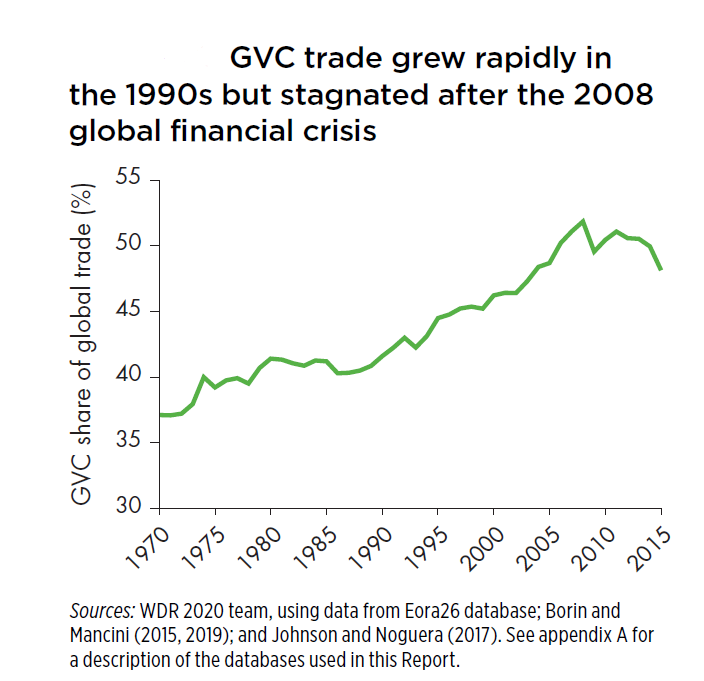
According to the World Bank experts, the 2008 global crisis and automation were the two main factors inhibiting globalization. Before that, low-income countries that participated in global value chains (GVCs) demonstrated high rates of economic growth. As a result, poverty globally fell sharply. However, by 2015, with global trade slowing down, the share of GVCs in global trade began to decrease, falling from 53% to 47%. The decline in poverty, accompanied by the slowdown in global trade (which had long been demonstrating a downward trend), restricted globalization.
Participation in global value chains reduces poverty
The convergence in global economic growth was powered by the rise of global value chains. GVCs break up the production process across countries. Firms specialize in a specific task and do not produce the whole product.
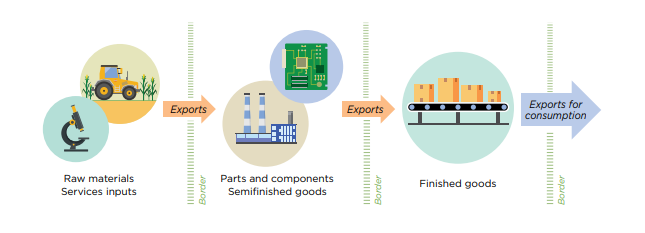 Interactions between firms typically involve durable relationships. Economic fundamentals drive countries participation in GVCs. But policies matterto enhance participation and broaden benefits. For example, Bangladesh, China, and Vietnam became integral to global GVCs, and so the steepest declines in poverty occurred in precisely those countries.
GVC trade stagnated after the 2008 global financial crisis
The last decade has seen nothing like the transformative events of the 1990sthe integration of China and Eastern Europe into the global economy and major trade agreements such as the Uruguay Round and the North American Free Trade Agreement (NAFTA). This is why it can no longer be taken for granted that trade will remain a force for prosperity. Since the global financial crisis of 2008, the growth of trade has been sluggish, and the expansion of GVCs has slowed.
Dynamics of GVC share in global trade in 19702015
Although it restricts GVC growth, automation can have a positive effect under certain conditions
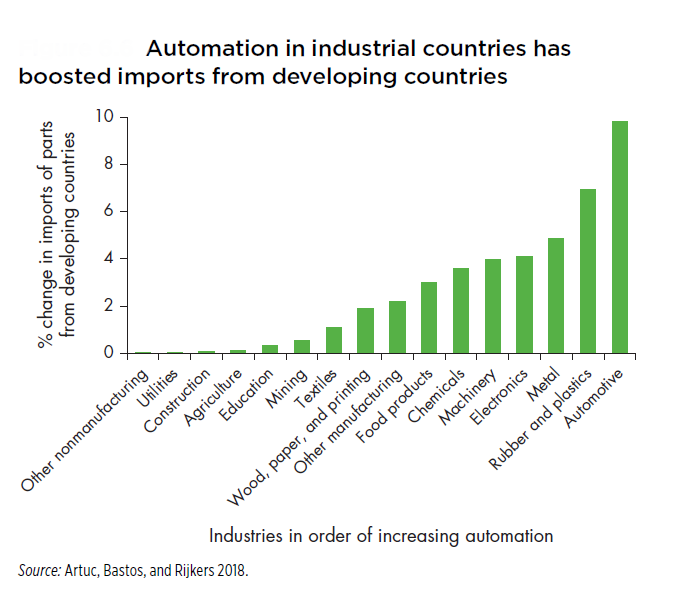
According to the World Bank experts, although automation has restricted globalization, this process can still have a positive effect on GVCs. Automation contributes to higher productivity and higher incomes in rich countries. This drives the demand for low-cost labor from low-income countries. Automation in industrial countries boosts imports from developing countries. For example, imports of parts from developing countries have increased by 10% in the automotive industry, by 6% in rubber and plastics, and by 4% in electronics and the metal industry.
The emergence of new products, new technologies of production such as automation and 3D printing, and new technologies of distribution is also contributing to GVC development. Innovation is leading to the emergence of new traded goods and services, which contributes to faster trade growth. In 2017, 65 percent of trade was in categories that did not exist in 1992.
Impact of automation on imports from developing countries
The successful model of laborintensive, tradeled growth is put at risk by the arrival of laborsaving technologies and trade conflicts among large countries
In the last few decades, two potentially serious threats have emerged to the successful model of labor intensive, tradeled growth. First, the arrival of laborsaving technologies could draw production closer to the consumer and reduce the demand for labor at home and abroad. Second, trade conflicts among large countries could lead to a retrenchment or a segmentation of GVCs.
Open, predictable policies will drive GVCs
The World Bank experts believe that GVCs can continue to boost economic growthprovided that developing countries undertake deeper reforms and industrial countries pursue open, predictable policies.
Recent increases in protection could also affect the evolution of GVCs. Protectionism could induce reshoring of existing GVCs or their shifts to new locations.
According to World Bank experts, unless policy predictability is restored, any expansion of GVCs is likely to remain on hold. As long as future access to markets is uncertain, firms will have an incentive to delay investment plans until uncertainty is resolved.
Environmental protection measures and labor market policies can help ensure GVC benefits are shared and sustainable
Beyond policies to facilitate participation in GVCs, complementary policies are needed to share their benefits and attenuate any costs. These include labor market policies to help workers who may be hurt by structural change; mechanisms to ensure compliance with labor regulations; and environmental protection measures.
International cooperation supports beneficial GVC participation
GVCs span boundaries, and policy action or inaction in one country can affect producers and consumers in other countries. International cooperation can help address the spillover effects of national policies and achieve better development outcomes.
Traditional trade negotiations may deliver more meaningful outcomes if the major developing country traders engage as equal partners and even leaders instead of seeking special and differential treatment; if the large industrial countries continue to place their faith in rules-based negotiations instead of resorting to unilateral protection; and if all countries work together to define a negotiating agenda that reflects both development and business priorities.
This is an adaptation of an original work by The World Bank. Views and opinions expressed in the adaptation are the sole responsibility of the author or authors of the adaptation and are not endorsed by The World Bank.