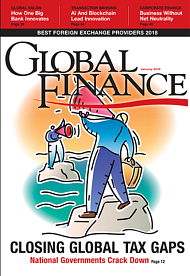
The financial crisis, followed by strict measures against citizens, marked a turning point in the public opinion. Before it, people took lightly the problem of so-called tax havens. However, during the crisis, governments began to experience a significant need for money, which affected ordinary people greatly. As a result of a series of leaks, such as the Panama Papers Case, concerning tax abuses by major players, citizens began to feel deceived, which led to strong public discontent, in response to which governments had to take necessary measures.
According to surveyed tax advisers, the number od cases of tax evasion — determination of illegal policies — is now insignificant, at least among large multinational corporations. Transnational corporations (especially those that are on the main stock exchanges) usually seek to operate within the basic tax planning, explains the tax partner of one of London’s law firms.
Nevertheless, tax evasion still leaves a lot of options for companies following the letter of law, although usually it is not its principle. Multinational corporations can use a variety of strategies, usually based on optimisation of the terrain, deductions, exemptions and tax rates provided by national tax laws, and assistance in accordance with applicable international agreements (such as double taxation treaties and the EU directives). These strategies can include measures from simple to complex.
According to the OECD, tax evasion strategies cost states about $240 billion a year. Researchers are announcing even higher figures, reaching $400 billion in the OECD and $200 billion in developing countries. It is assumed that the last group, which needs income most of all, loses 6-13% of the total tax revenue, even OECD countries lose from 2% to 3%.