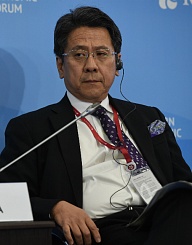
Tadashi Maeda, CEO and Executive Managing Director, Japan Bank for International Cooperation (JBIC), exclusively for SPIEF.
Which innovations are a priority for the world today?
Today, everyone wants to know about innovations connected to the so-called Fourth Industrial Revolution. By this we mean developments in artificial intelligence and the Internet of Things. The most important role is played by startups offering new solutions, and by education.
On what should world leaders agree?
What they need to agree on is peace, because when one group of countries launches missile attacks against another, this is very bad for business. The global economy today is in need of stability and independence from political decisions.
What is your economic outlook for 2030?
The global economy is currently stable, but protectionism does give cause for concern. The WTO, for instance, is a good platform for enforcing the rules, but it has its drawbacks. We need broader global trade channels involving a larger number of entrepreneurs. If we can achieve this, then we will see a much improved economy by 2030.
What advice do you have for entrepreneurs today?
We are living in a new era of intelligent control and automation. The most important thing now is to join forces and work together. New solutions and innovations should be open, clear, and accessible.
What is the purpose of life?
I have two daughters and a granddaughter. My task is to be confident that she will have a better life than we do. For me, the meaning of life is to make the world better for future generations.
Close