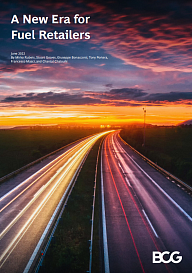
The report by BCG studies the current trends in fuel retail and the strategies fuel retailers will need to implement promptly to survive and thrive under the monumental threats they face.
The Roscongress Foundation presents the salient points of the publication accompanied by fragments of broadcasts of relevant panel discussions from the business programme of international events held by the Roscongress Foundation.
Some of the forces that are changing the fuel retail landscape are the rise of alternative fuels, the advent of advanced mobility modes, and digital technologies.
The first trend identified by BCG is that alternative fuels are no longer optional. Electric vehicles (EVs) have gained significant traction in the past few years; in some regions, sales are outpacing those of internal combustion engine (ICE) vehicles. Future bans on the sale of ICE vehicles (Norway’s will be the first to go into effect, by 2025) and government subsidies, along with greater affordability and a wider availability of models, have bumped EV sales up 41% since 2019. Advances in battery technology have also contributed to wider adoption. Sustainability is taking root, which is evidenced by more stringent emissions regulations, growing consumer awareness, and rising cost of carbon credits. There has also been a shift in use: instead of predominantly individual use, many drivers are turning to carpooling and shared rides. In addition, consumers have become less willing to give up precious time to driving when, thanks to new mobility modes, they can now use that time productively.
COVID-19 has changed consumer behavior: e-commerce growth escalates, digital restaurant delivery takes off, while consumer expectations keep rising. Digital technologies enable fuel retailers to better understand and serve customers’ changing needs and preferences. Fuel retailers are using AI and big-data analytics. To be most effective at winning customer loyalty, retailers need to serve the omnichannel experience, as consumers are engaging with the brand through mobile apps, online, and physically at the store or station. Finally, digital has enabled individual stations to use dynamic pricing—an important tool for keeping margins high during COVID when volumes plummeted.
To keep up with the latest trends and thrive, fuel retailers need to implement new strategies, transform their personalization programs, and pursue new areas of growth.
According to the authors of the report, fuel retailers can exploit three promising opportunities. First, they can reimagine the station by modernizing the pump through alternative fuel offerings and dynamic fuel pricing, transforming the C-store, and capitalizing on their real estate (and strategic locations) to become a services hub.
The customer loyalty program is another fundamental instrument that fuel retailers can use to shape their future. The opportunity both to build customer value and to differentiate themselves is abundant, considering how much most companies have invested in traditional earn-and-burn programs that extend the same set of offers to all customers, regardless of their different behaviors. In the era of hyperpersonalization, сonsumers’ hunger for digital-first and highly personalized journeys has made them generally willing to cede valuable personal data to retailers. Although originally collected to improve the efficiency and attractiveness of loyalty programs, when combined with contextual data, personal data can dramatically advance a company’s customer-centric ambitions by focusing on the customer’s lifetime value rather than on product lead strategies.
Recognizing the new areas of potential growth spurred by the rapid change (particularly technological) of the past few years, leading fuel retailers are beginning to follow their customers beyond the service station, offering them other services such as used-car purchase, car insurance, and maintenance. It’s a logical move, given the powerful advantage of their trusted brands, extensive footprints and networks, and access to different customer segments.
Thus, to prevail, if not lead, in a low-carbon future, fuel retailers need to derive the maximum value from their traditional core business as well as expand their value chain and unlock the potential of a wide range of new businesses.
Gain more insights about power industry, ecology, and modern trends in consumption in the Oil and Gas, Power generation, Renewable energy sources, Sustainable Development, and Consumer Sentiment sections of the Roscongress Information and Analytical System.